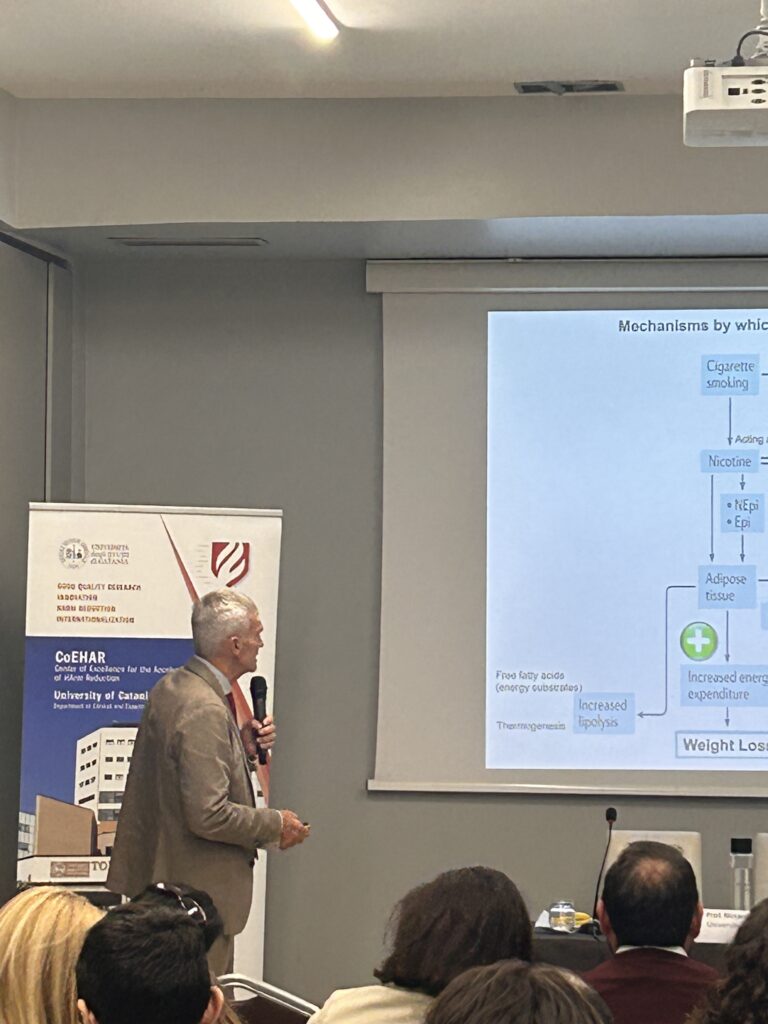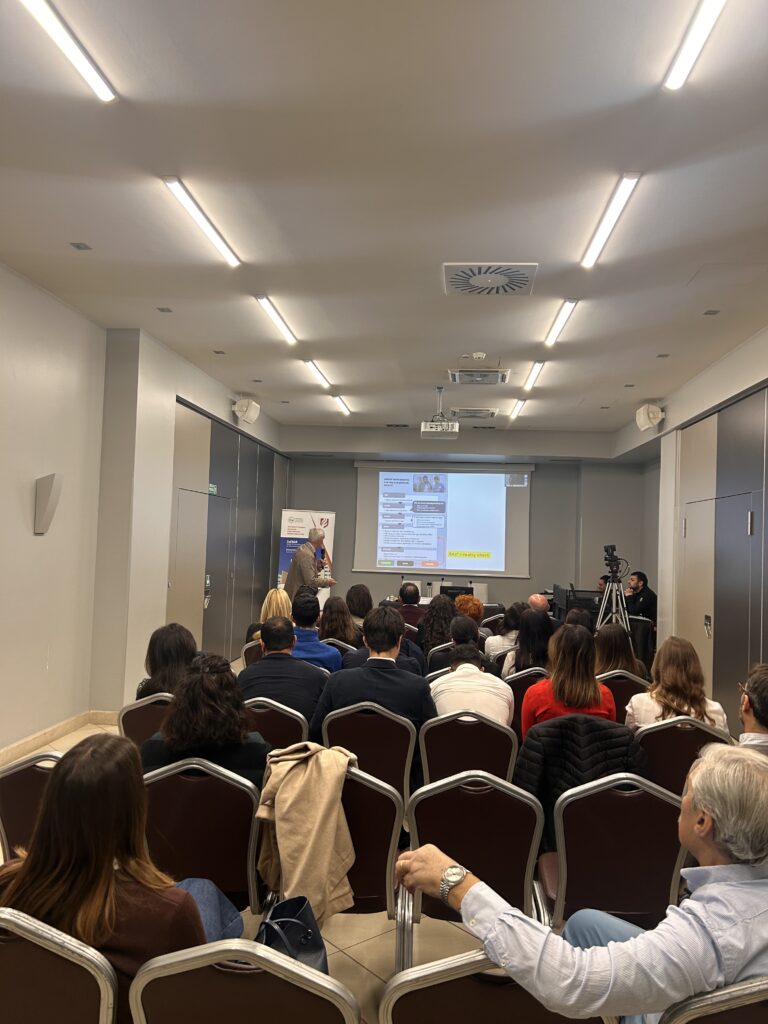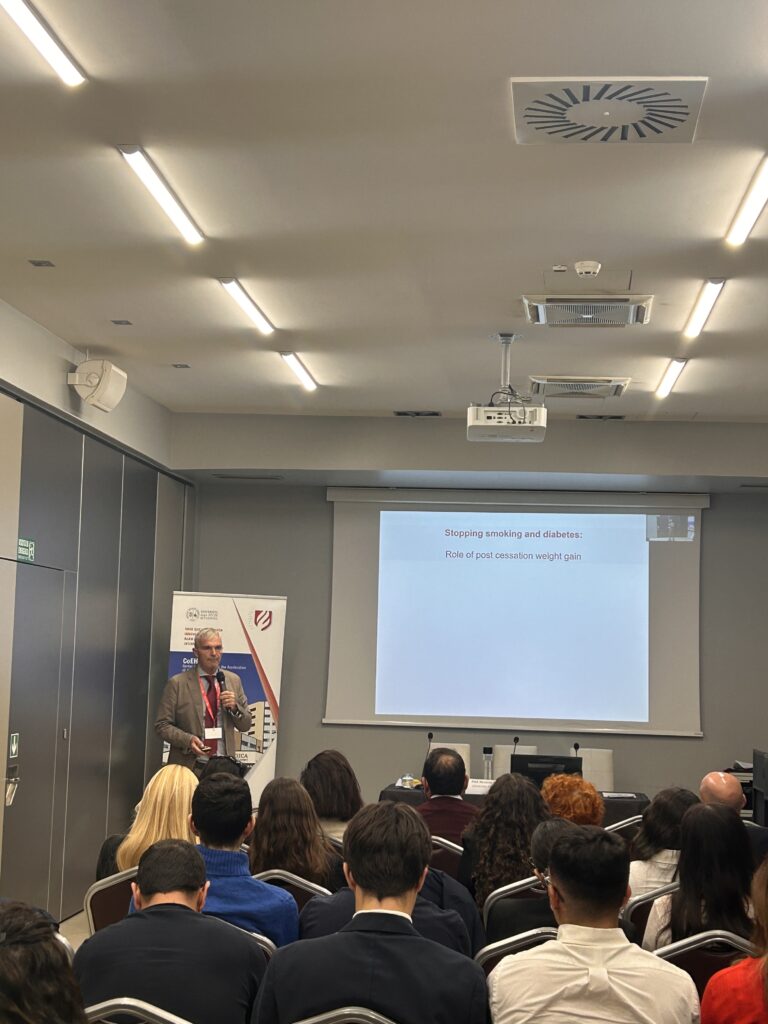
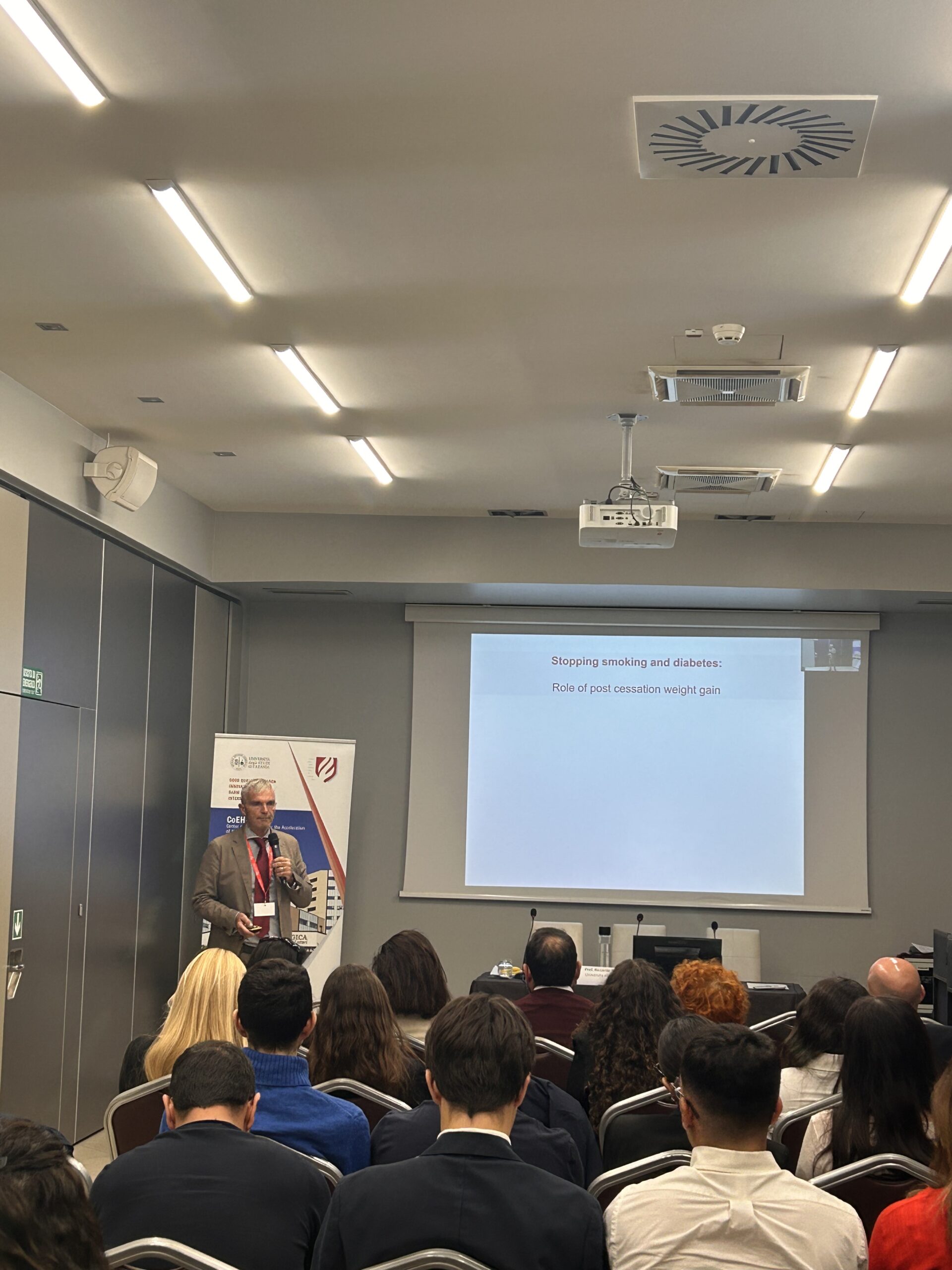
For two days, on November 10 and 11, Catania became the world capital of research on diabetes and smoking. At the Plaza Hotel, the first Delphi Consensus Meeting of the Collegium Internationale Diabetologicum —an unprecedented event- brought together over 40 international experts to address issues of smoking cessation and harm reduction among patients with type 2 diabetes.
The initiative, part of the PNRR HEAL Italia project, was organized in collaboration with CoEHAR – the Center of Excellence for the Acceleration of Harm Reduction at the University of Catania – which led the work, confirming its role as a global leader in research on strategies for reducing smoking-related risk.
The Delphi Method: Building Consensus to Improve Care
At the heart of the meeting, the use of the Delphi method—a scientific approach that harmonizes expert opinions from multiple countries to reach shared consensus on complex clinical issues.
Coordinated by Prof. Riccardo Polosa, founder of CoEHAR, and AIM Education, thanks to the european project by Heal Italia of the Italian Government, the panels tackled crucial topics: the prevalence of smoking among diabetic patients, its effects on metabolism and vascular complications, and pharmacological, behavioral, and harm-reduction interventions.
“The Delphi method allows us to translate the best scientific evidence into concrete recommendations, creating a common language among experts and clinicians worldwide,” explained Polosa.
The Diasmoke Project
CoEHAR once again proves to be the global reference center for research on the impact of smoking in diabetic patients. Through the Diasmoke project, coordinated by the Catania team, over 4,000 smoking diabetic patients from four countries were involved to assess the effects of switching from traditional cigarettes to reduced-risk products. Preliminary results show a significant improvement in glycemic control and cardiovascular health, confirming the validity of harm-reduction strategies as tangible support for smoking cessation.
From Guidelines to International Consensus
The Collegium’s discussions were based on international guidelines for smoking cessation among type 2 diabetic patients, developed by the DiaSmokeFree Working Group of CoEHAR.
The document provides practical guidance for integrating smoking cessation into diabetes management, including: systematic screening of smoking status; integrated assessment of cardiovascular and metabolic risk; combined pharmacological and behavioral interventions; post-cessation monitoring of blood glucose, blood pressure, and weight; and harm-reduction strategies for patients unable to quit immediately.
A Global Network of Experts
During the closed-door session of the Collegium, 36 internationally renowned experts came together to define new research priorities and operational recommendations.
Contributions also came from Rachel Ashton, Alison Martin, Jacob George, Antonio Ceriello, Edward Franek, Viswanathan Mohan, John Ioannidis, Lisa Chow, Stefano Del Prato, Richard Donnelly, John Buse, Venera Tomaselli, Christoph Schmitt, Guang Ning, and Peter Schwarz—demonstrating the project’s global scope.
Here the final BIO of the Scientific Board
A Step Forward for Global Health
The Collegium outlined the framework for an international consensus document, to be published in the coming months, which will serve as a reference point for the scientific community.
A collaborative, multidisciplinary, and open effort that reaffirms the role of CoEHAR and the University of Catania as pioneers of research in service of public health.
“Integrating harm reduction into diabetes care strategies means improving quality of life and reducing smoking-related mortality,” concluded Prof. Polosa. “Thanks to CoEHAR, Catania is leading a change that will have a global impact.”