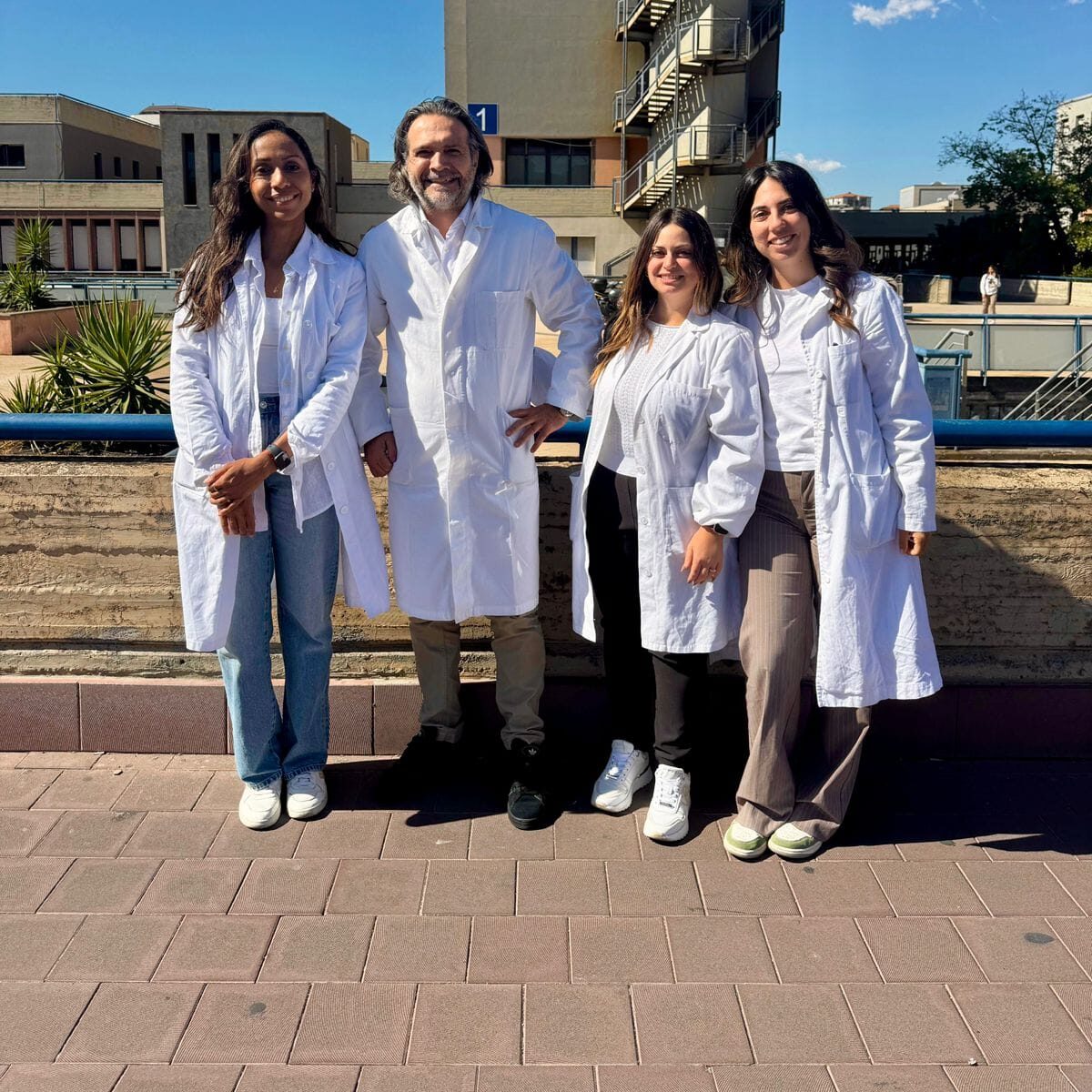
The CoEHAR had the pleasure of welcoming Dr. Lygia Sampaio, pulmonologist and researcher at the University of São Paulo (Brazil), during her visit to the Department of Education Sciences (DISFOR) at the University of Catania. Her academic and research experience was enriched through collaboration with Prof. Pasquale Caponnetto, CoEHAR member and Professor of Clinical Psychology at the University of Catania.
“In Brazil – explained Dr. Sampaio – our approach is mainly based on cognitive-behavioral therapy, which represents a key element in smoking cessation programs. The Brazilian public health system provides: cognitive-behavioral therapy, medications such as bupropion, and 12 weeks of follow-up for patients.”
However, Sampaio pointed out some limitations: “We do not have access to medications such as varenicline or cytisine, which could further improve treatment outcomes, and most importantly, in our country the use of electronic cigarettes is neither regulated nor approved as a cessation method.”
Her decision to spend a research period in Catania was motivated precisely by her interest in the scientific publications of Prof. Pasquale Caponnetto and Prof. Riccardo Polosa on the use of electronic cigarettes as a harm reduction tool.
“I felt the need to better understand how these devices are used in Europe, where they are part of the scientific debate on smoking cessation. In Brazil, on the contrary, a negative perception prevails: it is believed that they can induce a new dependence, especially among young people and adolescents. But this fear prevents smokers who want to quit from being offered treatment.”
According to the researcher, greater attention must be paid to psychiatric comorbidities, such as anxiety and depression, which often compromise cessation outcomes.
“I believe that the combination of more effective pharmacological therapies, psychological support and cognitive-behavioral therapy, along with proper management of associated disorders, represents the best strategy for the future,”concluded Dr. Sampaio.
Her visit to CoEHAR and the University of Catania is a concrete example of how international collaboration can enrich the scientific debate, fostering an exchange of knowledge and methodologies that strengthens the common commitment toward a shared goal: a smoke-free world.
👉 Read the full interview here