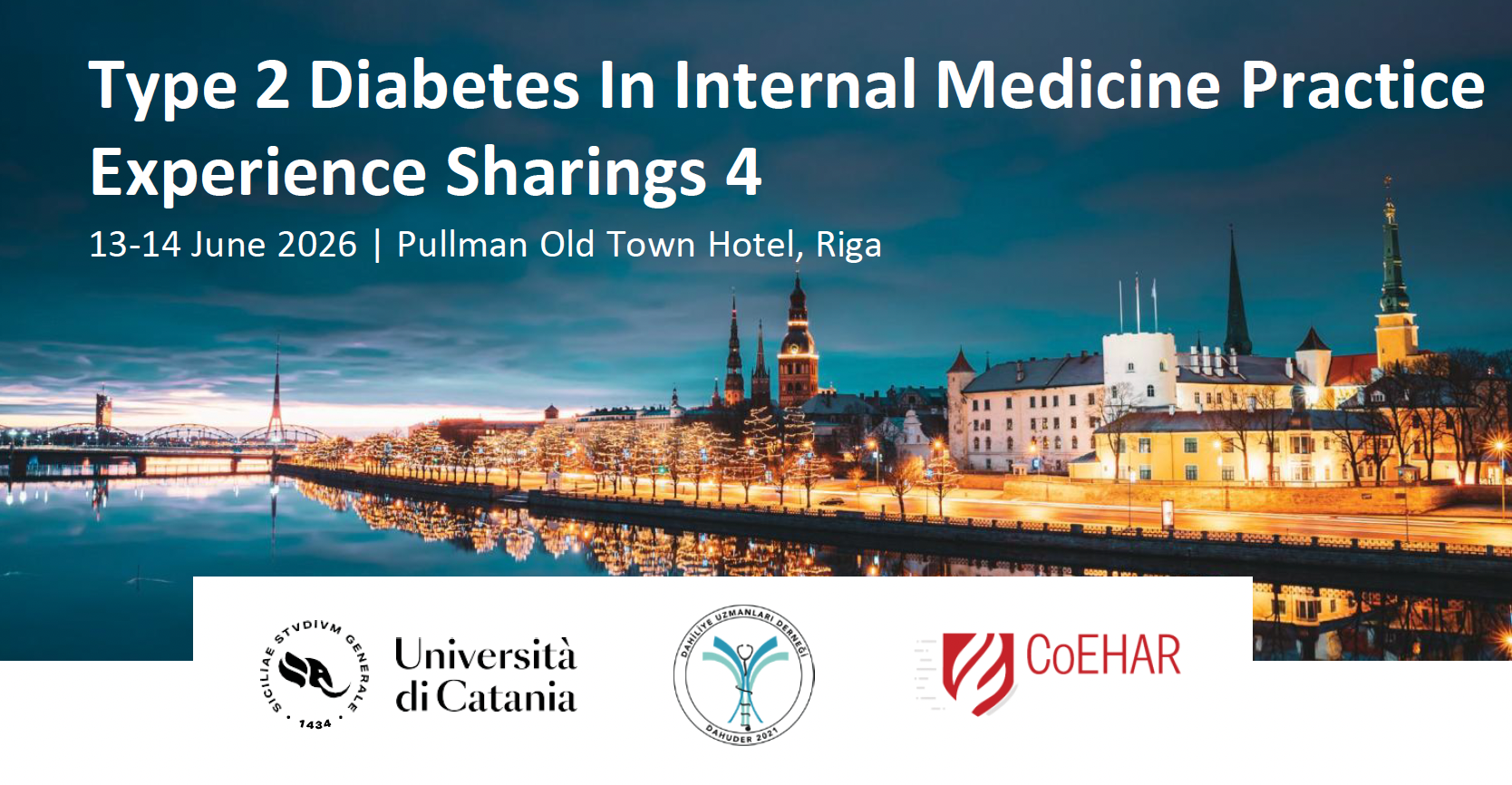
University of Catania’s CoEHAR continues to expand its scientific footprint in the field of metabolic diseases, organizing the 4th “Type 2 Diabetes in Internal Medicine Practice – Experience Sharings” meeting, to be held on June 13–14, 2026, in Riga.
Hosted in collaboration with the Internal Medicine Specialists Association (DAHUDER) in Turkey – including the 3rd edition taking place on 6-7 June in the same city – the international event will bring together clinicians and researchers to discuss the latest advances in diabetes management, cardiovascular protection, and emerging metabolic risk factors. The meeting will cover a wide range of clinically relevant topics, including: digital and device-based innovations in Type 1 diabetes, real-world effectiveness of SGLT2 inhibitors, cardiovascular protection in Type 2 diabetes, early combination treatment strategies, key metabolic mechanisms such as hypoglycemia and glucotoxicity. This multidisciplinary approach highlights the increasing need for integrated strategies in managing complex chronic diseases such as diabetes.
Among the invited speakers, Dr. Rossella Cannarella, endocrinologist and CoEHAR member, will deliver a lecture on “Emerging evidence linking environment and metabolic disease”. Her presentation will highlight the growing body of evidence connecting environmental exposures — including lifestyle and external risk factors — with metabolic dysfunction and diabetes progression.
This contribution reflects CoEHAR’s ongoing commitment to explore the intersection between metabolic health, environmental determinants, and risk reduction strategies. The link between smoking, environmental exposures, and metabolic disorders is indeed gaining increasing attention in scientific research — opening new perspectives for prevention and harm reduction.
As diabetes and metabolic diseases continue to rise globally, understanding how modifiable risk factors influence disease onset and progression will become increasingly important.
As highlighted by Prof. Riccardo Polosa, founder of CoEHAR:
“Metabolic diseases do not exist in isolation. They are deeply influenced by environmental exposures and lifestyle factors, including smoking. Expanding our research into metabolism means addressing these interactions more effectively and developing smarter, more comprehensive prevention strategies.”