
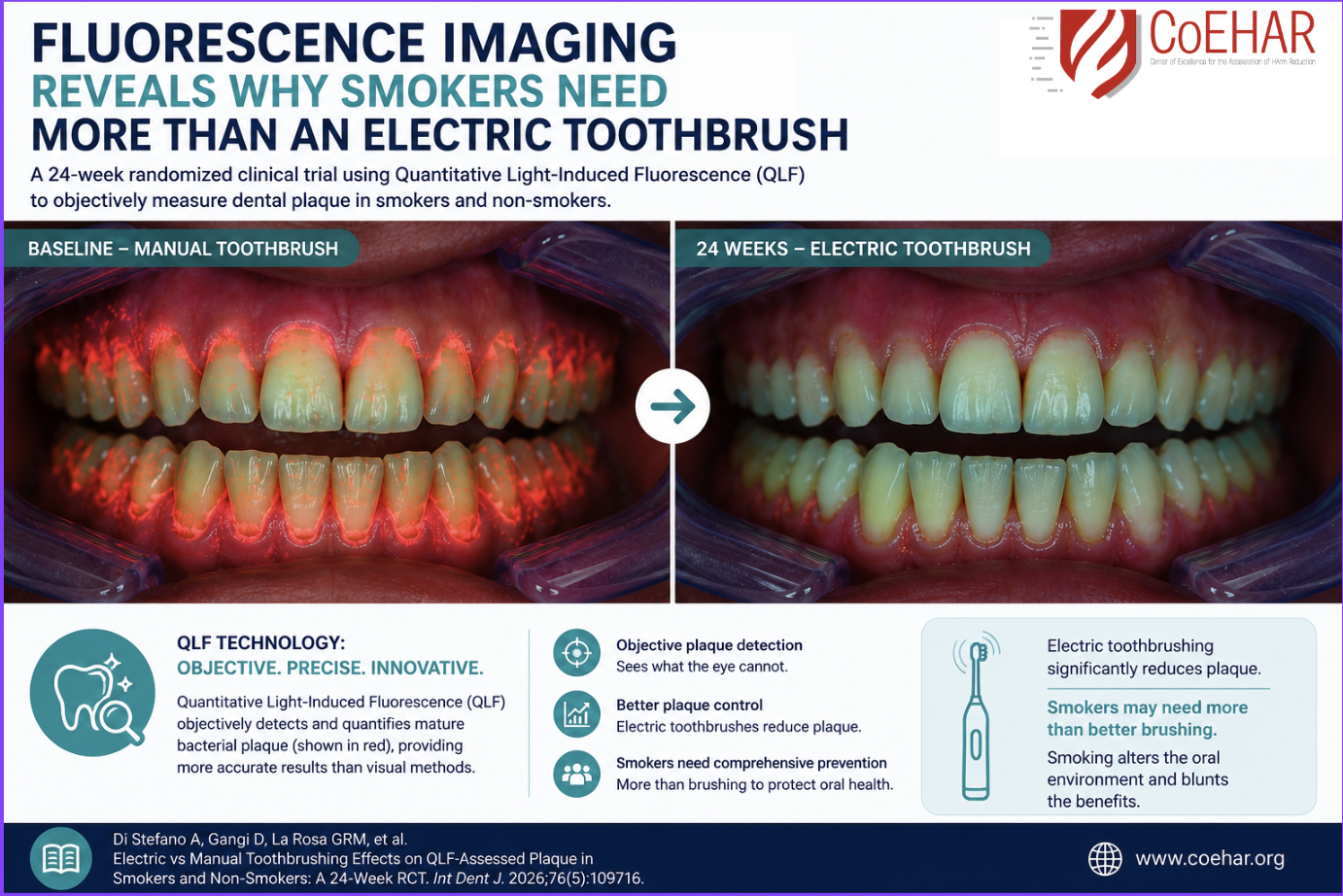
Using Quantitative Light-Induced Fluorescence (QLF), researchers objectively measured dental plaque over six months, showing that while electric toothbrushing improves plaque control, smokers require a more comprehensive oral-health prevention strategy.
A new randomized clinical trial by CoEHAR, published in the International Dental Journal, demonstrates how Quantitative Light-Induced Fluorescence (QLF) can provide a more objective and precise assessment of dental plaque, offering new insights into the effectiveness of oral-hygiene strategies in smokers and non-smokers.
The study found that oscillating-rotating electric toothbrushes significantly reduced plaque accumulation compared with manual toothbrushes over a 24-week period. However, the benefits were substantially greater among never-smokers, suggesting that smokers require more than improved brushing technology to effectively protect their oral health.
Seeing Plaque Through Fluorescence
The trial followed 126 adults, including current smokers and never-smokers, who were randomly assigned to use either an oscillating-rotating electric toothbrush or a manual toothbrush. Rather than relying on conventional visual plaque indices, researchers used Quantitative Light-Induced Fluorescence (QLF)—an advanced imaging technology capable of detecting mature bacterial plaque through its characteristic red fluorescence. This objective approach allows clinicians to quantify plaque accumulation with greater precision and monitor changes over time.
The use of fluorescence imaging represents an important step forward in oral-health research, providing measurable outcomes that go beyond traditional clinical observation.
Electric Toothbrushing Improves Plaque Control
After six months, participants using the electric toothbrush showed significantly lower plaque accumulation than those using a manual toothbrush. Among never-smokers, the reduction in plaque was clear and statistically significant. In smokers, however, the improvement was more limited and did not reach statistical significance. These findings suggest that while electric toothbrushing enhances plaque control, the biological effects of cigarette smoking may reduce its overall effectiveness.
Why Smokers Need More Than Better Brushing
Cigarette smoking is known to alter the oral ecosystem by promoting bacterial biofilm formation, modifying plaque composition, impairing host defence mechanisms and increasing the risk of periodontal disease. For this reason, smokers may require a broader preventive approach than simply adopting improved brushing technology.
According to the authors, effective oral-health prevention in smokers should combine: regular professional dental cleaning; effective interdental hygiene; personalized oral-health education; behavioural support; smoking cessation counselling; and, where available, objective monitoring through fluorescence imaging technologies such as QLF.
Together, these interventions can help reduce plaque accumulation, improve gingival health and increase patient awareness of oral-health changes.
Objective Imaging for Personalized Prevention
Beyond evaluating toothbrush performance, the study highlights the growing clinical value of QLF as a tool for personalized prevention.
By making dental plaque visible in real time, fluorescence imaging enables clinicians to provide tailored feedback that patients can immediately understand, potentially improving motivation, adherence to oral-hygiene recommendations and long-term preventive care.
“Electric toothbrushes can improve plaque control, but smokers require a more comprehensive preventive strategy,” said Professor Riccardo Polosa, founder of CoEHAR. “Objective technologies such as Quantitative Light-Induced Fluorescence allow clinicians not only to measure plaque with greater precision, but also to engage patients by making oral-health changes immediately visible. Combined with professional dental care and smoking cessation support, these tools can help reduce the oral-health burden associated with smoking.”
Reference
Di Stefano A, Gangi D, La Rosa GRM, Isola G, Fala V, Amaliya A, Kowalski J, Chapple I, Weglarz J, Del Giovane C, Pellegrino MN, Pacino SA, Polosa R. Electric vs Manual Toothbrushing Effects on QLF-Assessed Plaque in Smokers and Non-Smokers: A 24-Week RCT. International Dental Journal (2026).
https://www.sciencedirect.com/science/article/pii/S0020653926003096?via%3Dihub