
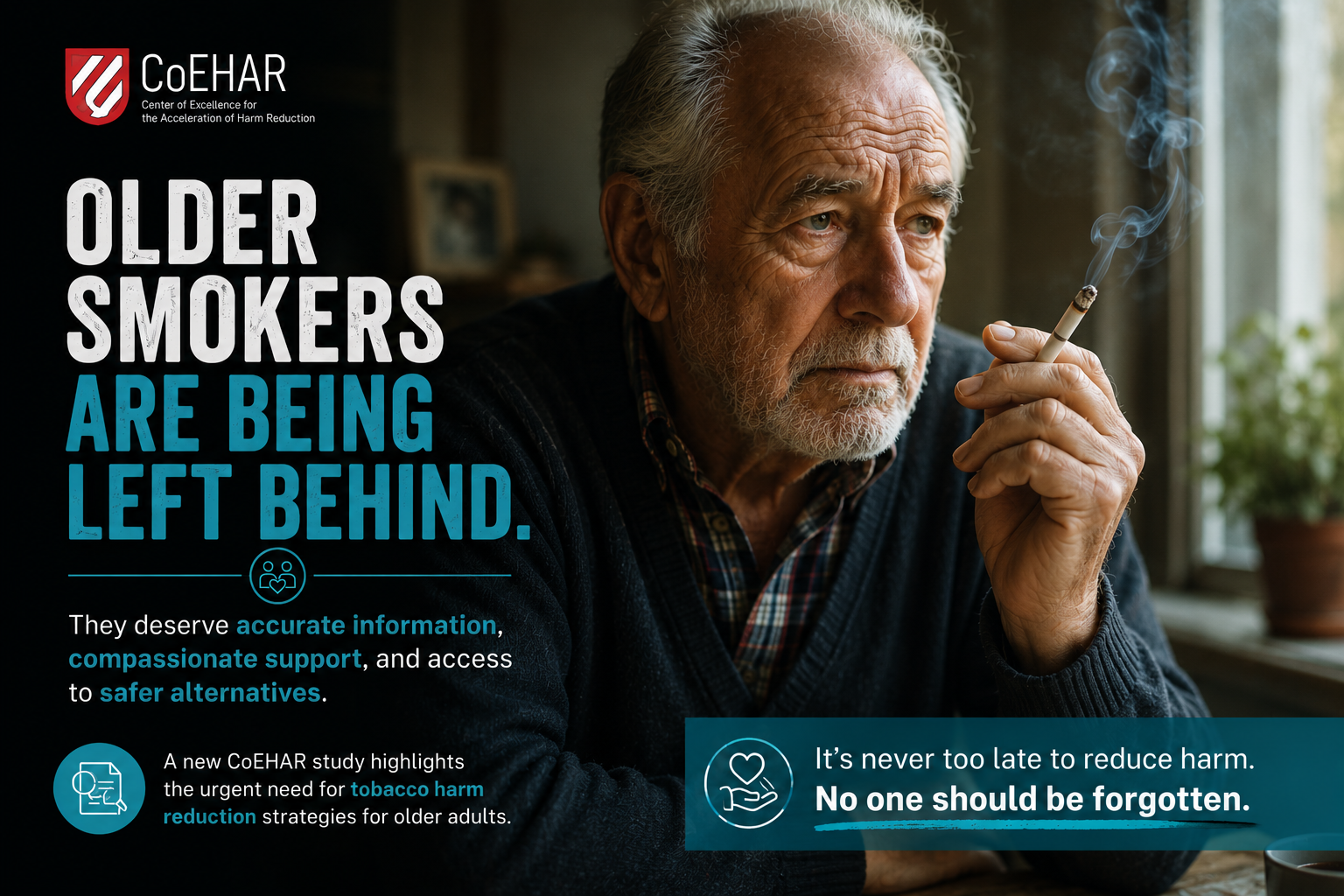
A new study by CoEHAR published in European Geriatric Medicine, highlights an often-overlooked population in tobacco control: older adults who smoke. Drawing on nationally representative data from the Scottish Health Survey (2017–2024), researchers analysed 13,297 adults aged 60 years and older to investigate the prevalence and characteristics of e-cigarette use in later life.
E-cigarette Use Among Older Adults Remains Low—and Is Almost Exclusively Linked to Smoking History
The study found that current e-cigarette use among older adults was relatively uncommon, with a weighted prevalence of 4.5%. However, almost all users had a history of cigarette smoking. Among current e-cigarette users, 95% were either current or former smokers, while only 5% had never smoked. These findings suggest that, in older adults, vaping is primarily used by individuals already exposed to combustible tobacco rather than representing a gateway to nicotine use. Researchers also observed that e-cigarette use declined substantially with advancing age and was more frequent among people living in socioeconomically deprived areas and among those reporting poorer health.
Older Smokers Deserve Greater Attention
Smoking remains one of the leading preventable causes of disease in older adults, accelerating age-related decline and contributing to cardiovascular disease, respiratory illness, frailty, and reduced quality of life. Yet older smokers are frequently overlooked in smoking cessation efforts. Many experience long-standing nicotine dependence, multiple unsuccessful quit attempts, lower confidence in their ability to quit, and fewer opportunities to receive cessation advice from healthcare professionals.
The authors argue that this vulnerable population deserves greater clinical attention, personalised counselling, and accurate information about the relative risks of different nicotine products.
Accurate Risk Communication Matters
The study highlights the importance of distinguishing between complete smoking cessation, complete switching from combustible cigarettes to combustion-free nicotine products, and dual use, as each carries different implications for health and requires different clinical management.
The authors also caution against misleading risk communication that exaggerates the risks of e-cigarettes relative to conventional cigarettes, particularly among older smokers who may already have limited access to accurate information.
While quitting all tobacco and nicotine products remains the optimal goal, complete switching away from combustible cigarettes may reduce exposure to many of the toxic substances generated by tobacco combustion for smokers who are unable or unwilling to quit.
Integrating Tobacco Harm Reduction into Geriatric Care
According to the researchers, routine assessment of nicotine-product use should become part of comprehensive geriatric and primary care. Healthcare professionals should consider smoking status alongside frailty, multimorbidity, cognitive function, respiratory symptoms, cardiovascular risk, manual dexterity, and the patient’s care environment when discussing smoking cessation and harm reduction strategies.
The study reinforces an important public-health message: older smokers should not be excluded from tobacco control strategies simply because of their age. Providing evidence-based information, compassionate clinical support, and access to less harmful alternatives may help reduce the burden of smoking-related disease among one of the populations that has historically received the least attention.
“Ageist assumptions have no place in tobacco control,” said Professor Riccardo Polosa, founder of CoEHAR. “The idea that older smokers are too old to benefit, too difficult to help, or already know everything they need to know is scientifically weak and ethically troubling. There is always something we can do to help people regardless of age. Tobacco harm reduction may be part of this strategy by reducing exposure to the greatest source of risk: tobacco combustion.”
The authors also call for prospective studies to better understand how smoking behaviours evolve in older populations and how transitions between smoking, vaping, dual use, and complete cessation influence healthy ageing.
Reference
Adebisi YA, Alhur AA, Ogunkola IO, Alshahrani NZ, Lucero-Prisno DE III, Adeniran UA, Geraci G, Tomaselli V, Polosa R. Prevalence and correlates of e-cigarette use among older adults aged 60 years and over. European Geriatric Medicine (2026).
https://link.springer.com/article/10.1007/s41999-026-01539-2