
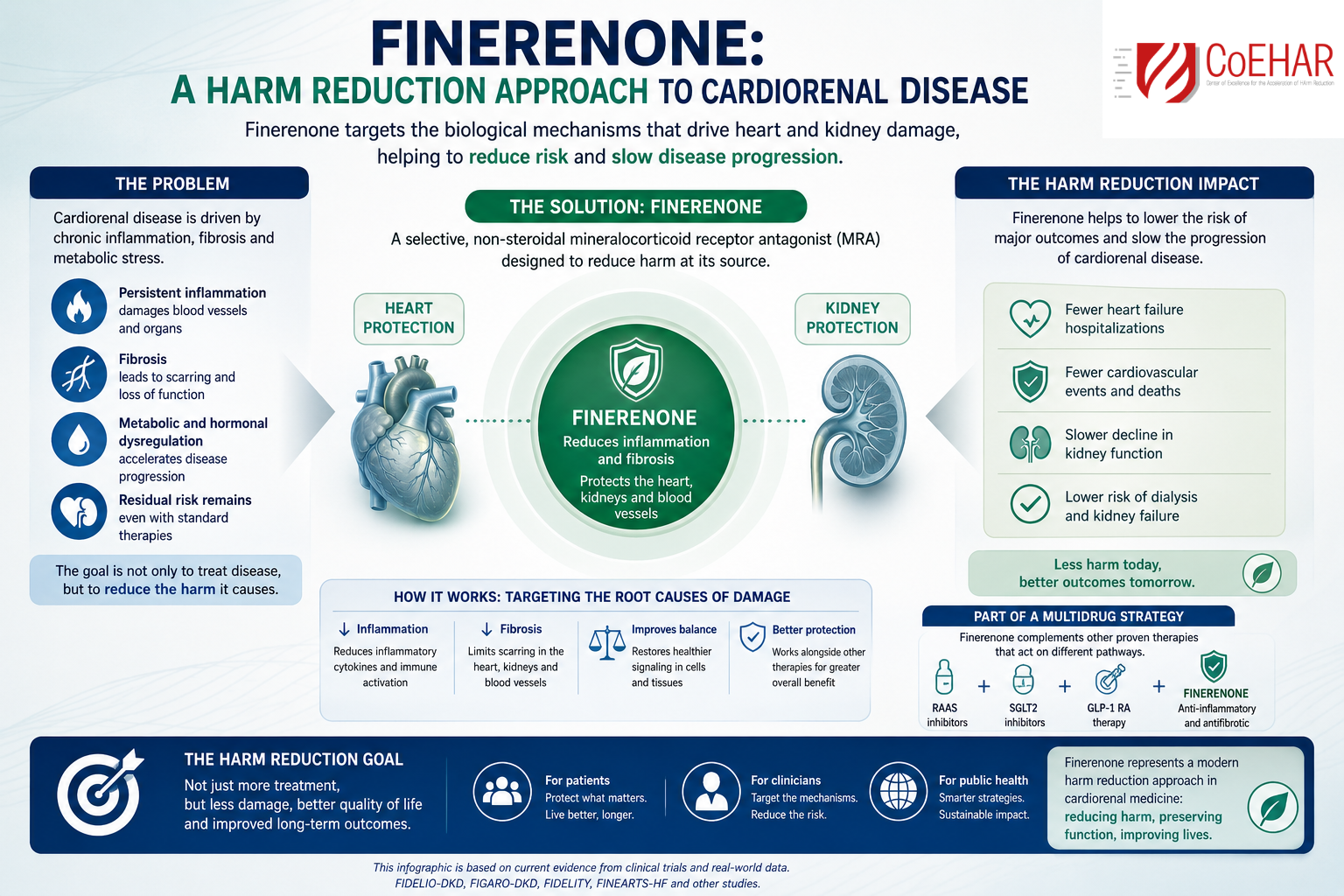
A new scientific review co-authored by CoEHAR researchers explores the role of finerenone, a medication used to protect the heart and kidneys in high-risk patients with diabetes and chronic kidney disease. The review highlights how modern medicine is increasingly moving toward integrated strategies designed to reduce long-term organ damage and improve overall health outcomes.
Published in Cardiovascular Drugs and Therapy, the review titled “Finerenone in Cardiorenal Disease: A Narrative Review of Molecular Mechanisms, Clinical Evidence, and Emerging Therapeutic Roles” provides a comprehensive overview of the molecular mechanisms, clinical evidence, and emerging therapeutic applications of finerenone in patients with chronic kidney disease, cardiovascular disease, heart failure, and diabetes.
The article emphasizes how cardiorenal disease is not driven by a single pathological process, but rather by a complex interaction of inflammation, oxidative stress, fibrosis, endothelial dysfunction, neurohormonal activation, and metabolic dysregulation. According to the authors, this evolving therapeutic landscape reflects a broader shift in medicine toward a “harm reduction” model focused on minimizing long-term organ damage rather than simply controlling isolated clinical parameters.
Within this framework, finerenone is described as a next-generation therapy that helps reduce inflammation and fibrosis — two key processes involved in progressive heart and kidney damage — even in patients already receiving standard treatments.
The review summarizes evidence from major international trials including FIDELIO-DKD, FIGARO-DKD, FIDELITY, and FINEARTS-HF, which demonstrated that finerenone can significantly reduce progression of kidney disease, cardiovascular events, hospitalization for heart failure, and mortality risk in high-risk patients. Moreover, the growing use of combination therapies in cardiorenal medicine can work together on complementary biological mechanisms to provide broader protection for the heart, kidneys, and metabolic health. The review further highlights finerenone’s favorable safety profile compared with older similar medications, particularly regarding lower rates of side effects such as dangerous potassium increases.
Prof. Riccardo Polosa, co-author of the review and founder of CoEHAR, commented:
“Modern cardiorenal therapy is increasingly moving toward integrated risk-reduction strategies capable of simultaneously protecting multiple organs and biological systems. This approach reflects a broader harm reduction philosophy in medicine, where the objective is not simply treating disease once damage has occurred, but minimizing the mechanisms that progressively drive organ injury over time.”
According to the authors, future treatments for chronic heart and kidney diseases will increasingly rely on integrated strategies capable of protecting multiple organs at the same time. Emerging evidence suggest indeed potential systemic effects of finerenone beyond the heart and kidney, including possible benefits for retinal microvascular disease and liver fibrosis.
Reference
Geraci G, Sinatra N, Paternò V, Calabrese V, Cassataro G, Cuttone G, Geraci C, Esposito R, Mancusi C, Pucci G, Zanoli L, Mulè G, Polosa R, Ferrara P, Carollo C. Finerenone in Cardiorenal Disease: A Narrative Review of Molecular Mechanisms, Clinical Evidence, and Emerging Therapeutic Roles. Cardiovascular Drugs and Therapy (2026).